
I spent years inside other people's businesses before I started
automating them.
I came to this from finance first, then some time running operations from the inside - close enough to see where work stalls, what quietly gets dropped, and how much of a business is held together in somebody's head.
So when I build now, I start with how the work actually moves rather than which tools to connect. The tools are the easy part. Understanding the workflow well enough to know what happens when a step fails is what makes the system worth keeping.
I started out as a stockbroker, working with numbers, risk, and money that belonged to someone else. That kind of work builds a specific habit: check it, then check it again, because being roughly right isn't good enough. That habit is why I test systems before I trust them.
When ChatGPT landed I went deep on the creative side - images, logos, music. What stuck wasn't the output. It was watching the same tool produce completely different results depending on how I asked. Being specific about what I wanted changed everything. That's still true - most of what makes a system work well is being clear about the job before anything gets built.
I moved into fractional executive assistant work, which put me inside the day-to-day of very different businesses - a fractional CFO, an education consultant, real estate, other consultants, healthcare professionals. I saw how work actually moves - where it stalls, what gets dropped, and how often a "process" is really just one person remembering. I didn't have a name for it then. It was systems thinking.
I started building the systems myself - dashboards, task systems, websites, automations - and then got serious about the fundamentals underneath them. Evals, error handling, logging, knowing what breaks. An automation that works today isn't the same as one that still works in six months. Building for the second one is the actual work.
What I build when nobody's paying me
These aren't client work. They're the things I built for my own house, because we needed them.
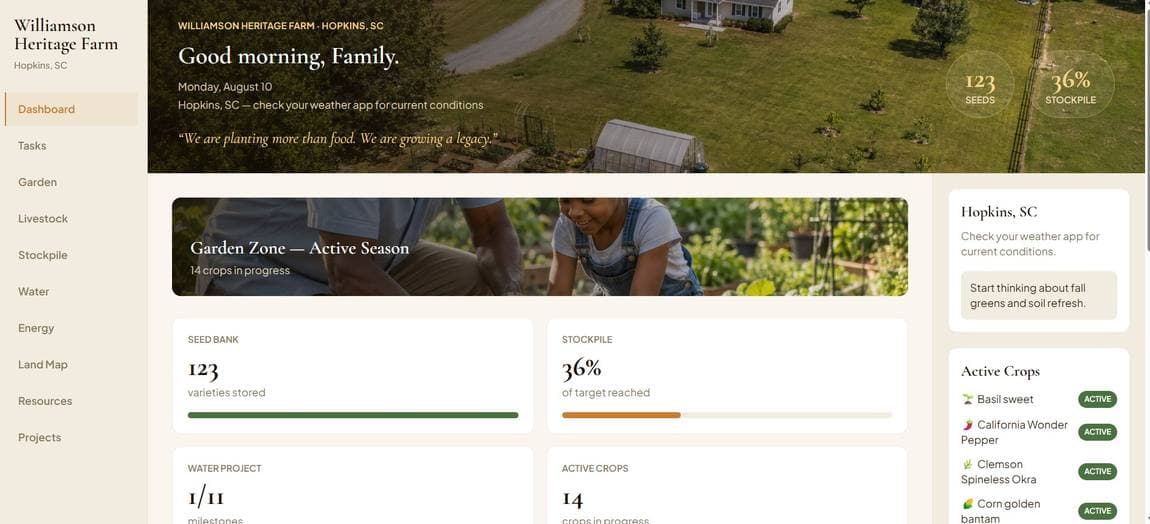
Homestead OS
Next.js · SQLite · DockerThe command center for our farm. Garden, livestock, water, energy, stockpile, land map, and a master task list running across all of it. Self-hosted on a VPS and deployed through Coolify.
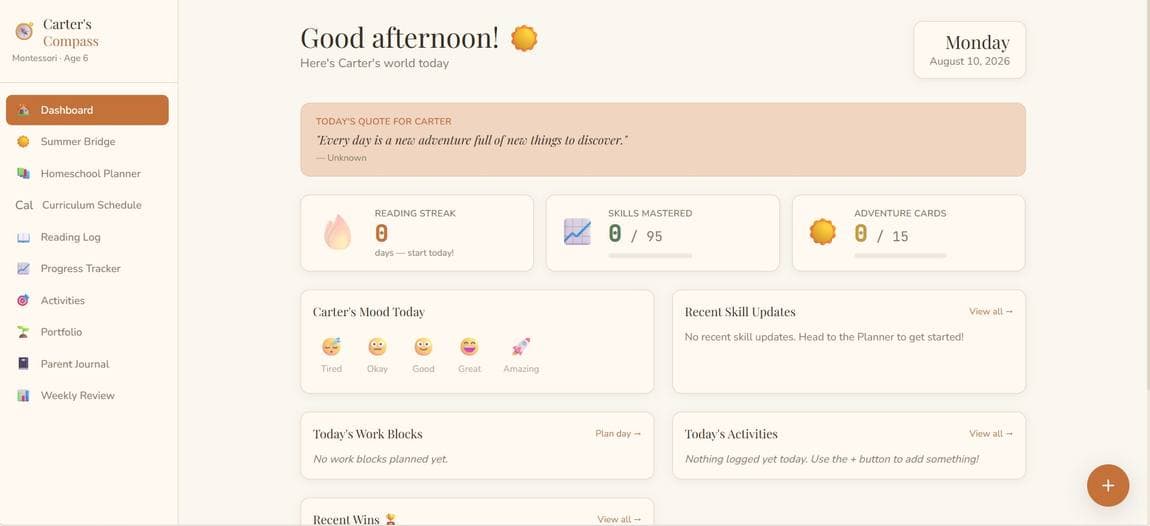
Compass
Built for my six-year-oldA learning dashboard for my son's homeschool year - curriculum planning by month, reading log, progress tracking, a portfolio of his work, and a parent journal. I get a real record of what he's actually learned instead of a shoebox of worksheets.
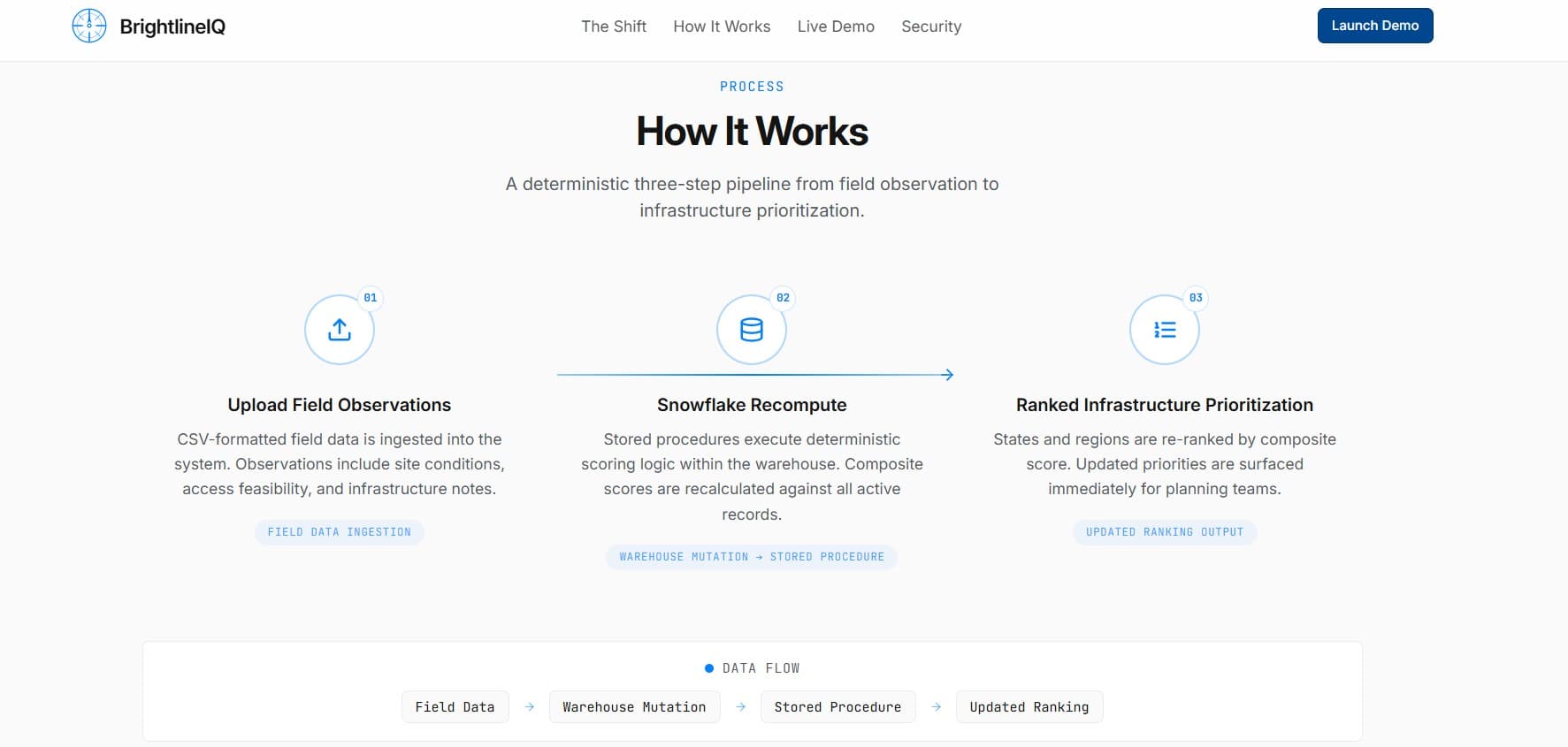
BrightlineIQ
Warehouse + scoringA market intelligence platform for the fiber broadband industry, built on Snowflake. It fuses public infrastructure and funding data into something an operator can actually make decisions from.
This one isn't a weekend project. It's the deepest data work I've done - warehouse modeling, pipelines, and the infrastructure underneath it all.
Trails, a small farm, and one very opinionated six-year-old.
My son and I get outside as often as we can. For him, it is energy release and explore time. For me, it is reset and refresh time - the place where my brain finally gets quiet enough to come back sharper.
The rest of my spare hours go into the homestead: a well that needs repairing, a garden that's somehow ahead of schedule, and a stockpile spreadsheet that became a whole application because of course it did.
I now have strong opinions about okra. I did not see that coming.An open invitation to other builders
this one isn't a job postingI'm not looking to hire anyone or hand work off. I'm looking for the other thing: people building real systems who want a second set of eyes on what they've made - and who'll give me the same on mine.
If you're deep in a build and want someone to poke holes in it, tell me what you're working on. I'll tell you what I'd do differently, and I'll probably ask you to do the same for me.
india@acendriasolutions.com →Here for the business side instead?
bring me your messiest workflowStart with the Audit and get your build map in two weeks, or book a free 30-minute call first if you'd rather talk it through.